What’s New?
- Staff Information Report on Phases 1 and 2
- Public Information Centre #1 held August 26, 2026
- Phase 2: Concepts Summary Document now available
About the Project
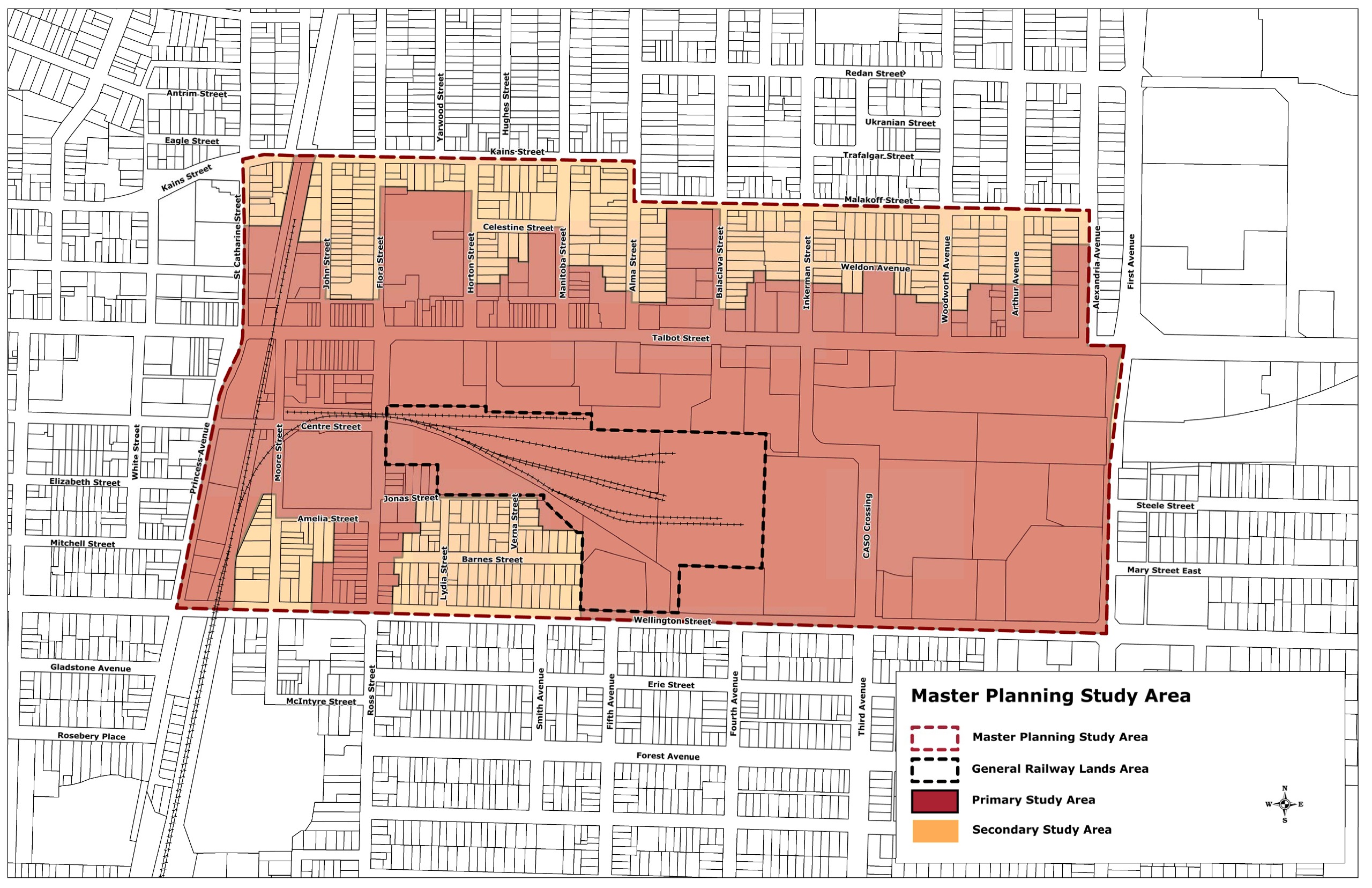
The City of St. Thomas is conducting a land use planning process for a central portion of the Railway City, as shown in the study map below. The intent is to prepare a Preferred Master Plan to help guide future development within the study area over the next 25 years (to 2051).
The Plan will identify areas for development/redevelopment, permitted land uses and built form, transportation and mobility connections, parks and the public realm, public service / community uses, and infrastructure strategies while recognizing and considering significant cultural heritage resources (including the historical significance of the Railway Lands and Downtown St. Thomas Heritage Conservation District) and ensuring appropriate transition of new development to low-rise residential areas.
The Planning Process
The intended approach for this project includes four (4) phases of planning work, each with engagement of landowners, interested parties and the community. 
- Phase 1: Context (*Complete*)
- Part of the initial stage of the planning study process is gathering background information, assessing the existing conditions, highlighting what City-wide master plans or strategies may provide directions for the future of the study area, identifying broader factors (housing policy, economic outlooks, community needs, growth forecasts, etc.) and considerations, conducting a situational analysis (strengths/important features, challenges, opportunities), and outlining an overall framework of principles and goals to guide the land use planning of the area. Please see a summary of the existing conditions, highlights of future plans, considerations, and influencing factors by clicking here.
- Engagement – What is the project about? How to get involved? What is important about this area? What challenges need to be considered? What opportunities are there?
- View the Phase 1: Existing Context Summary document
- Phase 2: Master Plan Concepts (*Complete*)
- Develop Concept Plans for land use (residential, commercial, mixed use, etc.), potential building heights and unit density, transportation (road connections, active transportation and trails, transit connectivity, etc.), parks and public spaces
- Engagement – What could the Railway City Central area look like in the future?
- View the Phase 2 Concept Summary Document
- Phase 3: Preferred Plan
- Creating and identifying a Preferred Plan to visualize the future land use of the area, undertake technical review and prepare supporting plans and strategies (servicing and stormwater management, transportation, parks and community infrastructure, cultural heritage, urban design, etc.)
- Engagement – Help shape the future of the area and recommendations for moving forward.
- Phase 4: Official Plan Amendment and Community Planning Permit Bylaw
- Prepare draft and final amendments to the City’s Official Plan and Community Planning Permit Bylaw to implement the Preferred Plan within local planning documents.
- Engagement – formal notices, statutory public meetings, direct input and Council decisions
Expected Results
The Preferred Master Plan for the area would be supported by plans and strategies (transportation, servicing and stormwater infrastructure, parks and community uses, and more). It is expected that implementation will occur through an amendment to the St. Thomas Official Plan that could be in the form of a new Secondary Plan or specific policies for the area. It is also expected that implementation of the plan could occur through adding appropriate locations through an amendment or new Community Planning Permit Bylaw (instead of properties being within the Zoning Bylaw).
Get Involved: Engagement Opportunities
Engagement with the community, landowners and interested parties will be an important part of the project process. We will need to hear from you throughout the phase of this planning study. Click on the “Follow” button at the top left of the page to stay connected and receive updates on project information and opportunities to provide feedback as the project proceeds. Stay tuned for future opportunities!
Past Engagement Opportunities:
- Feedback: Master Plan Concepts
- Survey: Getting To Know the Area – Past, Present, Future
- Drop a Pin: Places of Railway City Central Area
- Feedback: DRAFT Guiding Principles & Goals
Future Events/Engagement Opportunities
- Future Public Information Centre #2, expected in November